Clary Sage: The "Clear Eye" Herb for Mind & Body
Medieval monks called it "clear eyes" for its ability to clarify vision—both physical and metaphorical. This remarkable herb offers far more than meets the eye.
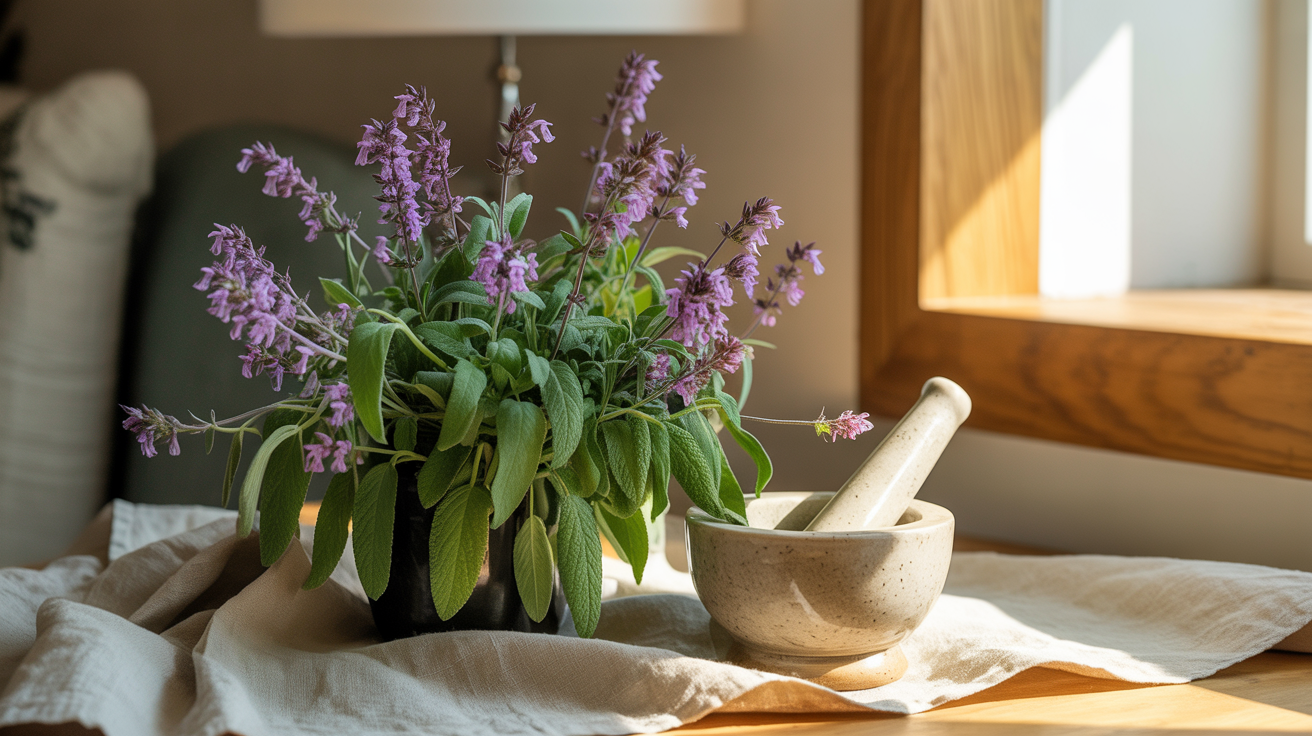
Of all the herbs in the sage family, clary sage (Salvia sclarea) is perhaps the most underappreciated. While common sage gets all the culinary glory, clary sage has been quietly working behind the scenes for centuries—prized by healers, monks, and even winemakers for its unique and versatile properties.
From Monastery Gardens to Modern Wellness
Historical Note
The name 'clary' comes from the Latin 'clarus,' meaning clear. Medieval monks cultivated it in their infirmary gardens and used a preparation of clary sage seeds to create a mucilaginous wash for tired or inflamed eyes—earning it the folk name 'clear eye.' But the monks valued it for far more than eye care. Their manuscripts describe it as a warming, cheering herb that could lift heaviness of spirit and ease tension in the body. German winemakers in the Rhine Valley used clary sage to enhance cheap wines, giving them a more intoxicating quality—a practice that eventually earned clary sage another nickname: 'muscatel sage.'
By the 17th century, English herbalist Nicholas Culpeper wrote extensively about clary sage's ability to 'comfort the vital spirits' and ease complaints of the back and womb. His observations, while filtered through the medical understanding of his time, align remarkably well with what modern aromatherapists report today.
The Science of Sclareol
What makes clary sage particularly interesting to modern researchers is a compound called sclareol. This diterpene has been studied for its potential anti-inflammatory and balancing properties. The essential oil also contains linalyl acetate (also found in lavender), which contributes to its calming, almost euphoric effect. Clary sage is one of the most studied essential oils for women's health. Research published in the Journal of Phytotherapy Research found that inhaling clary sage essential oil helped reduce cortisol levels and had a mood-lifting effect. Other studies have explored its role in easing menstrual discomfort and supporting the body through hormonal transitions, including perimenopause and menopause. But clary sage isn't just for hormonal support. It has a long tradition of use for muscle tension, respiratory support, and as a general nervous system tonic. Think of it as an herb that helps the body find its equilibrium.
Working With Clary Sage
Balancing Massage Oil
What You'll Need:
- 1 ounce (30 ml) jojoba oil
- 6 drops clary sage essential oil
- 4 drops lavender essential oil
- 2 drops geranium essential oil
How to Make It:
Combine all oils in a dark glass bottle. Roll between your palms to blend. Massage into the abdomen, lower back, or neck and shoulders. Particularly lovely as an evening ritual. The combination of clary sage and lavender creates a deeply relaxing, grounding blend.
Clarity & Calm Diffuser Blend
What You'll Need:
- 3 drops clary sage essential oil
- 2 drops bergamot essential oil
- 1 drop ylang ylang essential oil
How to Make It:
Add to your diffuser and run for 30-60 minutes. This blend is beautiful for creating a warm, calming atmosphere during times of stress or transition. The bergamot lifts the blend while clary sage provides grounding warmth.
Warm Compress for Tension
What You'll Need:
- A basin of warm (not hot) water
- 3-4 drops clary sage essential oil
- A soft cloth or flannel
How to Make It:
Add the clary sage drops to the warm water and swirl. Lay the cloth on the water's surface to absorb the oil, wring out gently, and apply to the area of tension—lower abdomen, lower back, or shoulders. Rest with the compress for 15-20 minutes. Re-warm and reapply as needed.
Safety & Considerations
- Avoid during pregnancy—clary sage has traditionally been considered a uterine stimulant
- Do not use with alcohol—clary sage can intensify its effects
- May cause drowsiness in some people—use with caution before driving
- Always dilute before applying to skin (2% dilution for adults)
- Not recommended for use during or directly before a menstrual period if flow is very heavy
- As with all essential oils, purchase from reputable suppliers who provide GC/MS testing results
There's a quiet authority to clary sage. It doesn't shout; it settles. It doesn't force change; it supports the body's own ability to find balance. In a world that often feels overwhelming, that's exactly the kind of botanical ally worth having in your apothecary.
Ready to Measure Your Blend?
If this article inspired a recipe, our dilution calculator will help you figure out the exact number of drops for any carrier oil amount.
Go to the Dilution CalculatorRelated Selections
Tools we recommend for this practice.
Organic Clary Sage Essential Oil
Steam-distilled from flowering tops, GC/MS tested.
Warm Compress Kit
Organic flannel cloths and a ceramic warming bowl for herbal compresses.
We only recommend products we've personally researched and believe meet the Vesta Standard.